Our First Practice Clean-Up Training Day at Cransley Reservoir
We couldn’t have picked a better day for CADSAC’s first clean-up training session with the Maritime Volunteer Service (MVS). The morning began early, 6am in fact, when I got up to check my kit and load the car. My regulators had spent the night indoors so they wouldn’t get cold enough to risk a freeflow. A small decision, but after today’s training, one that felt more meaningful than I expected.
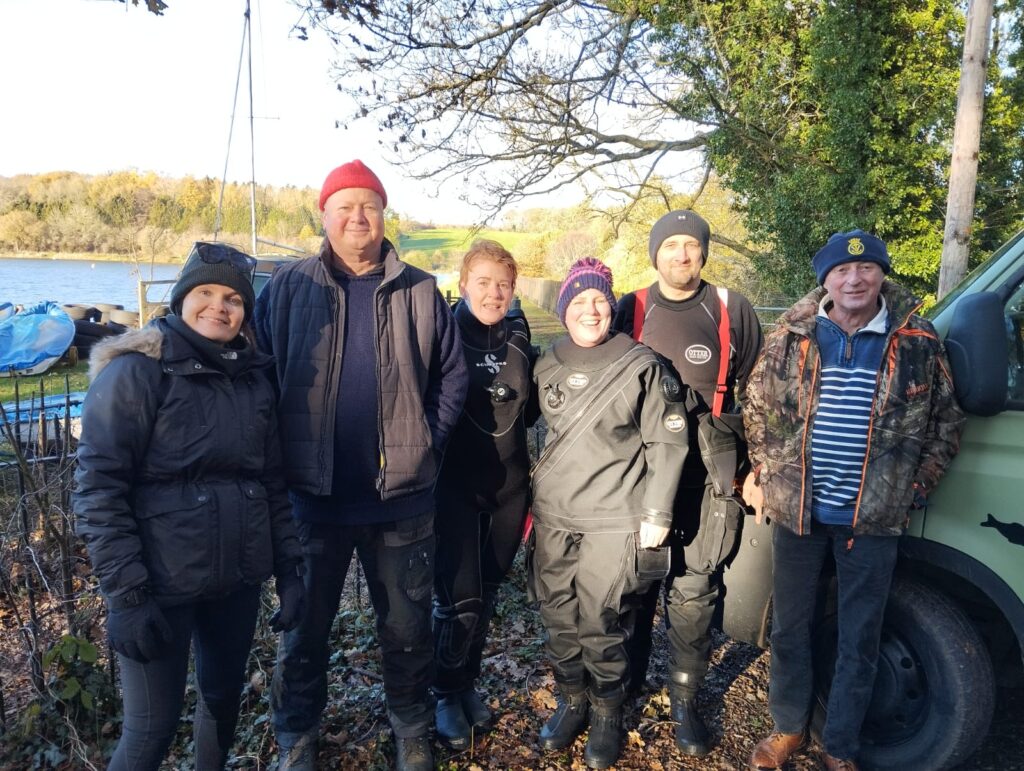
Victoria arrived just before nine, and after a quick coffee and chat, we were on the road by 9.15am. When we pulled up at Cransley Sailing Club 15 minutes later, the first thing we spotted was Witty McVitty (the van), then Keith Patrick standing on the veranda, mug in hand, steam rising dramatically into the crisp winter air.
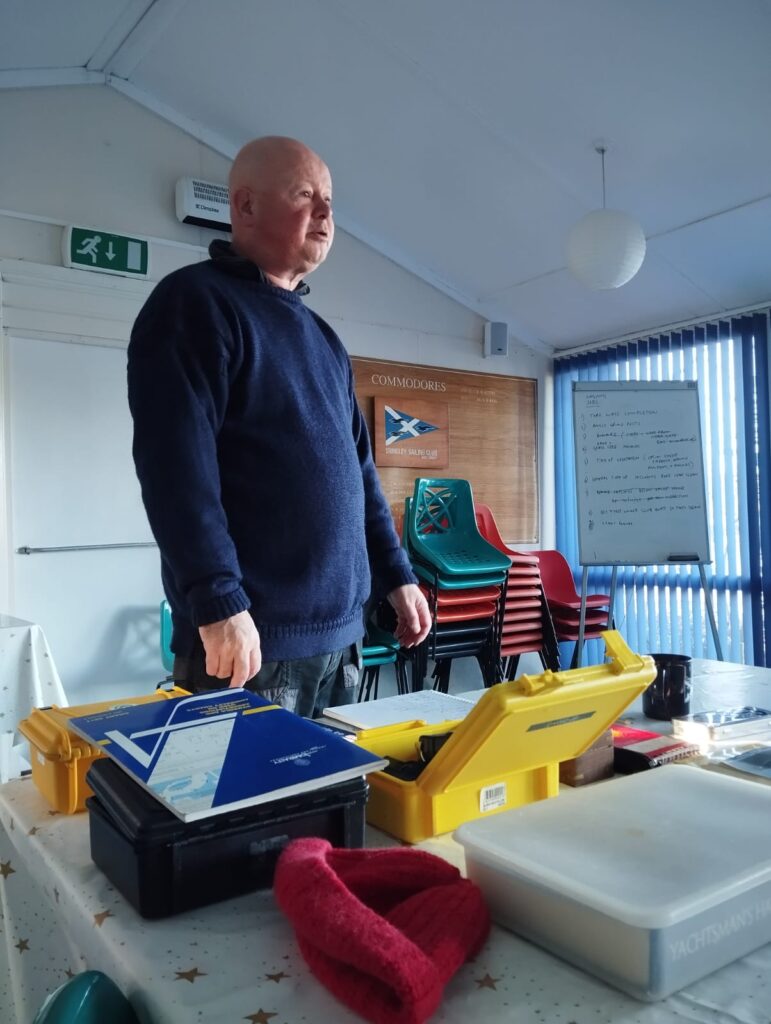
Inside, the clubhouse was warm, with Clare and Adam already settled in. Cups of coffee poured, we got straight into the day Keith had clearly put a great deal of thought into.
Charts, Tides, and the Waters We Dive In
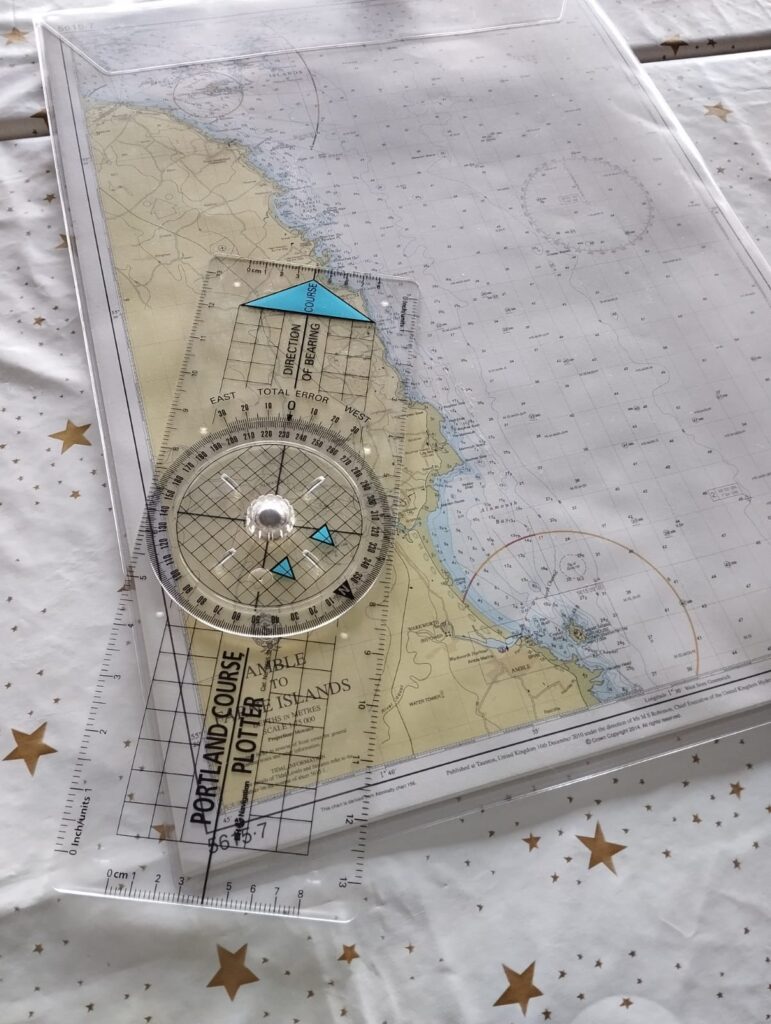
We started with charts (definitely not maps), learning how to identify markings, measure coordinates, and visualise navigation lines. Keith walked us through depth contours, tidal predictions, and the difference between tides and currents. We explored the set (direction) and rate (speed) of tides and discussed what kind of water movement becomes problematic for divers. Keith’s personal experiences (equal parts entertaining and cautionary) brought the theory sharply to life.
After a short comfort break and a biscuit top-up, we moved on to the next stage – boats.
Boats, Balance, and Channel 16
On the shore, we went through the essential parts of a boat (bow, stern, port, starboard) and the names of lines, knots, and equipment we’d need to secure or protect, especially regulators, which are heartbreakingly easy to damage if stepped on.
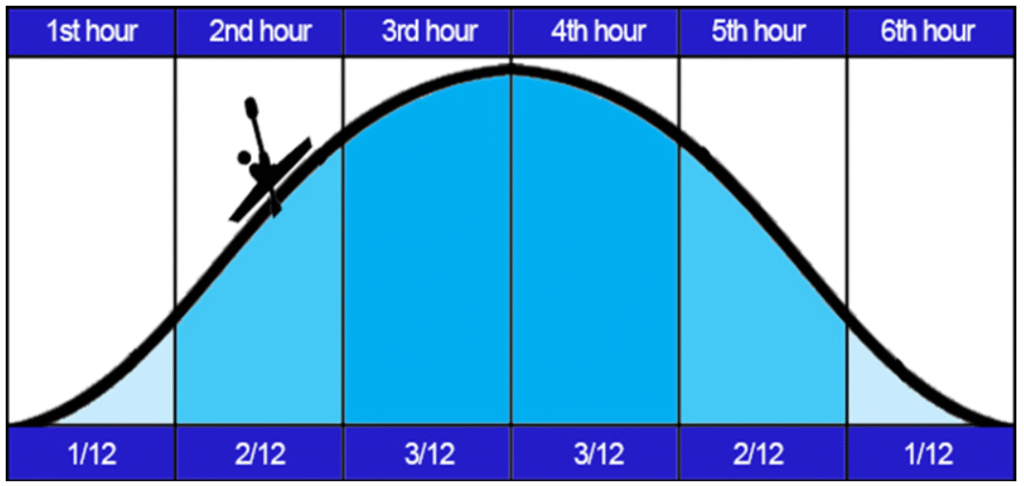
We learned about weight distribution, avoiding everyone piling onto the same side, and the Rule of Twelfths for predicting tidal flow.
Then we practised distress calls on Channel 16.
Mayday, Mayday, Mayday, followed by the vessel name, position, and nature of the emergency. It was an oddly grounding part of the day: the kind of information you hope you’ll never need, but are grateful to understand.
And then it was time to get changed.
Cold Water, Warm Spirits, and… Goose Poo
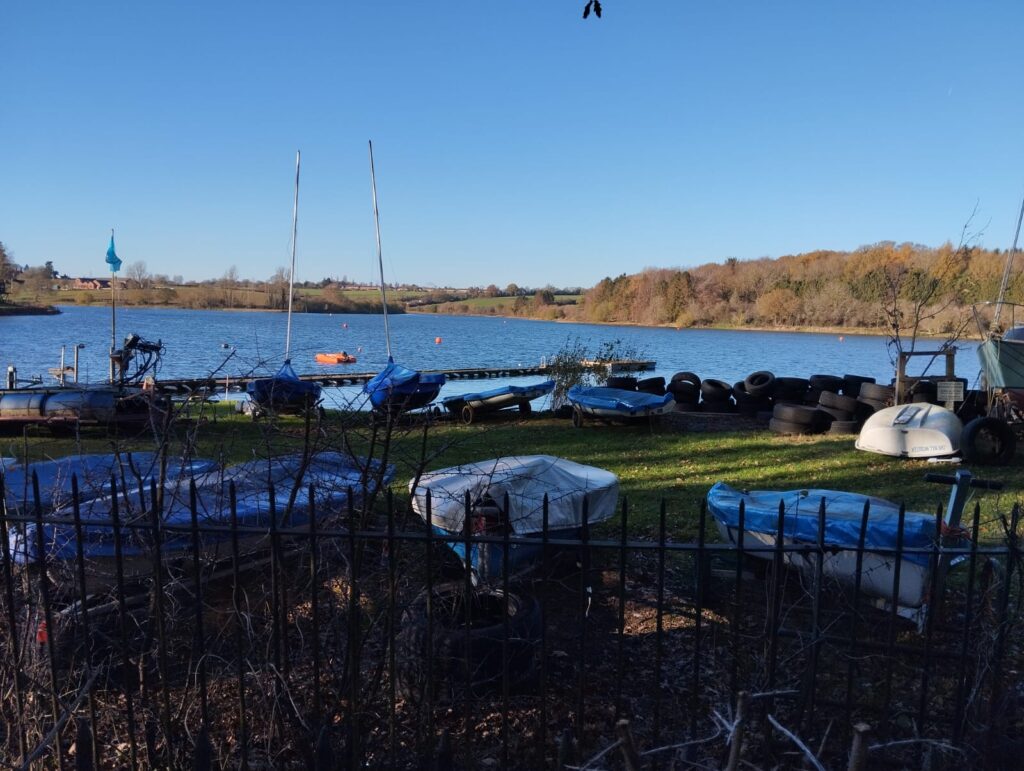
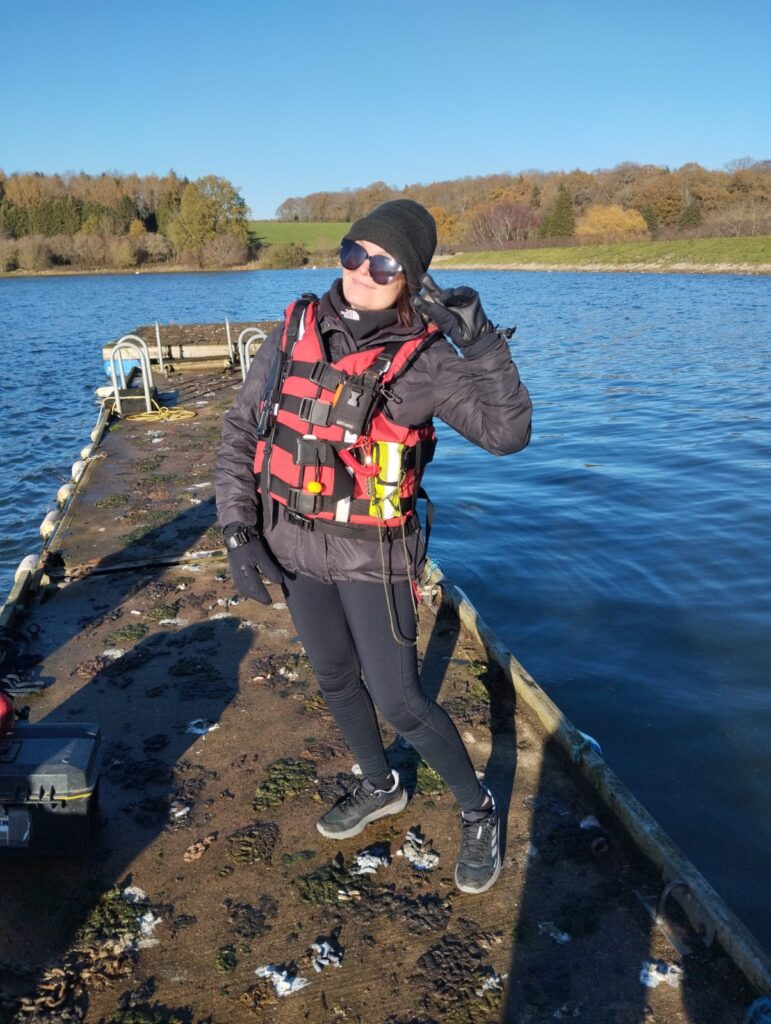
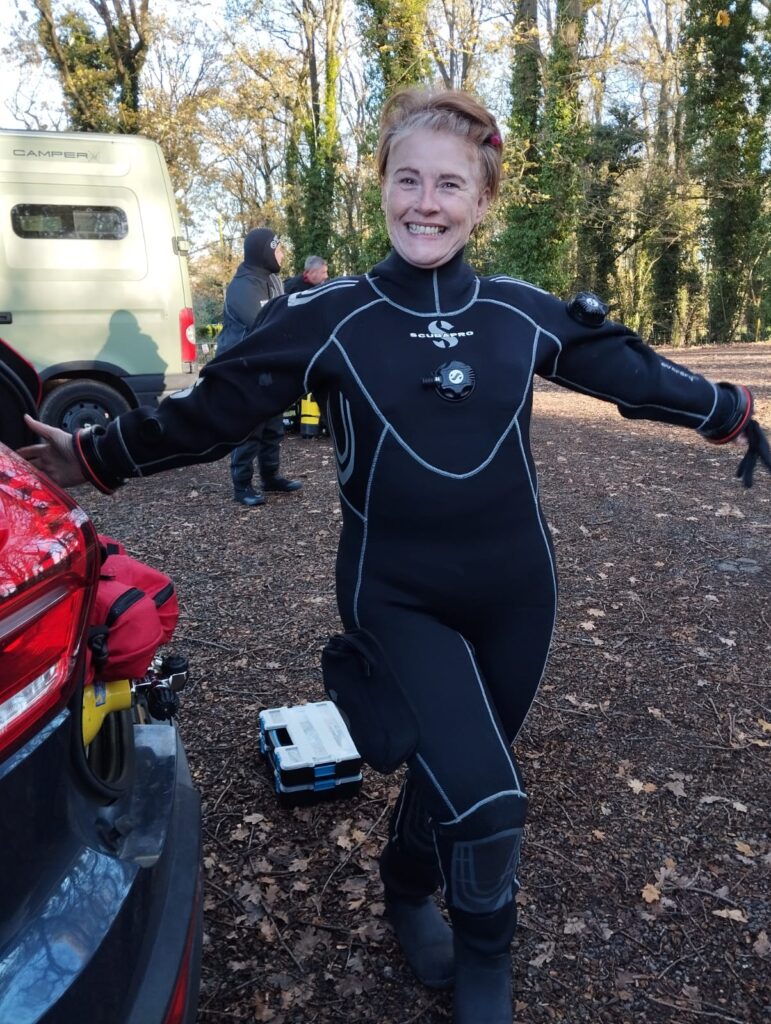
We suited up and walked out toward the boat on the harpoon pontoon, trying not to slip on the astonishing, borderline comical amount of goose poo coating the surface.
Once we reached the boat and pulled it in on a line, we discovered it had collected nearly a foot of water. So, naturally, I got into the boat and started bailing. Nothing like a bit of unexpected manual labour to warm you up.
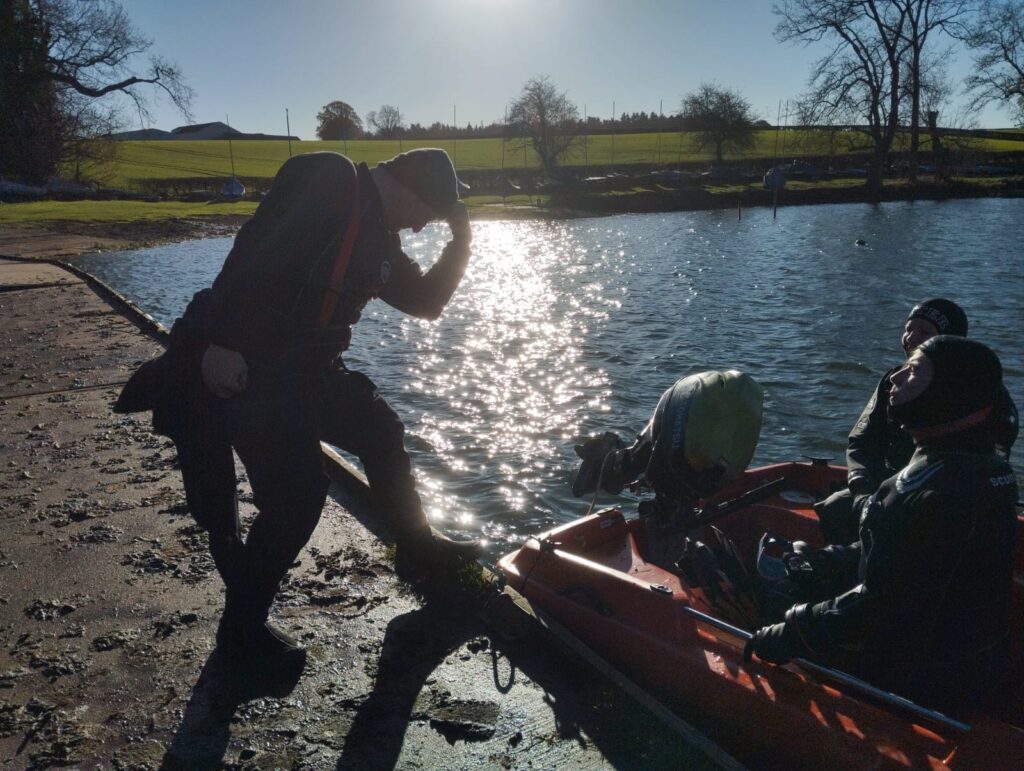
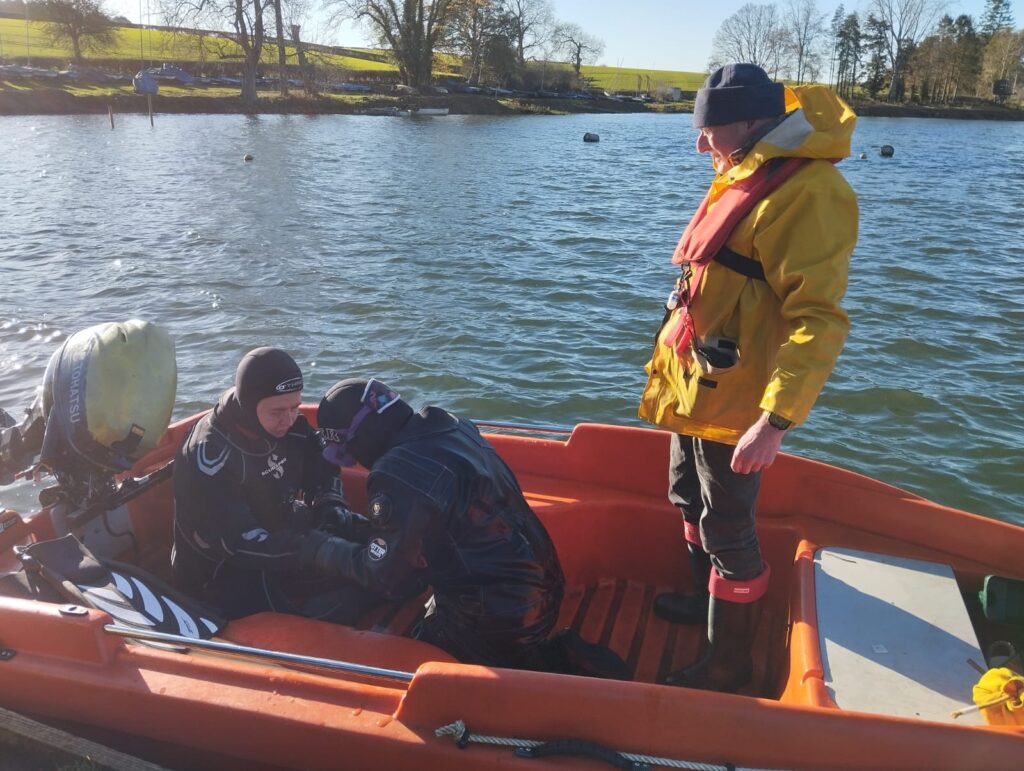
Unfortunately, Adam had a bit of a drysuit zip malfunction and couldn’t get in the water, but he became our indispensable kit-runner for the day. Victoria, still not fully over a recent cold, stayed dry as our photographer and shore cover. Keith took the helm as skipper and instructor, with Mick assisting Clare and me from the boat.
Back Rolls, Buddy Checks, and the Otter Impression of the Century
Once the boat was emptied, Clare was first in for the back-roll entry drill, wearing dry suit, mask, and fins but no regulator. The hesitation was understandable; we’re all so used to the comfort of a reg in our mouth. But Clare executed a beautifully controlled entrance and popped straight back up, where we practised hauling her onto the boat using the one-two-three-launch technique. The resulting otter impression was, I have to say, exceptional.
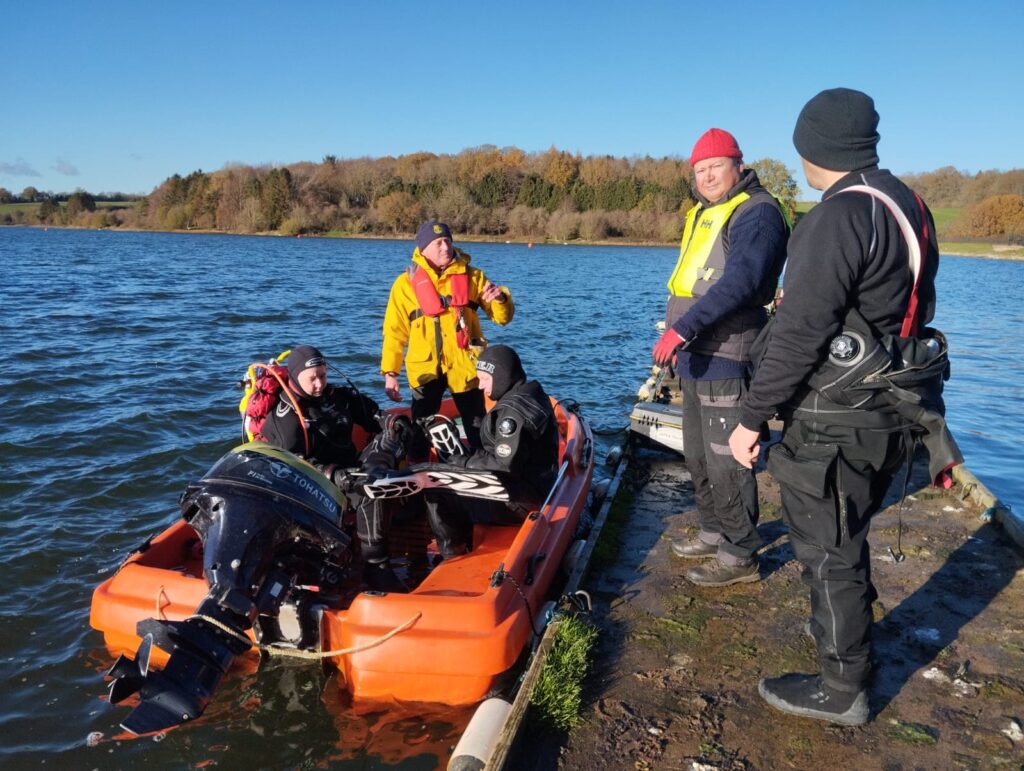
Then it was my turn. I felt the same odd vulnerability without my usual twin 7s, but in I went and up I bobbed.
Getting hauled out was surprisingly smooth, though I credit Clare and Mick’s combined strength more than my own elegance.
Next, we repeated the drills with full kit. With very little space in the boat, we learned quickly that fins first is the only sensible way to kit up. Teamwork became essential, especially for buddy checks. And thank goodness for that because Clare spotted that I hadn’t connected my wing inflator hose.
That small save proved its worth minutes later when I rolled back in and instantly felt cold water seeping into my drysuit. My zip wasn’t fully closed. A chilly reminder of why we train. Fortunately, the dry gloves I’d fitted the week before worked perfectly, so warm hands, at least!
A Day of Learning, Laughter, and Teamwork
By the time we finished, we’d learned more than we expected, about charts, tides, boats, teamwork, and the value of practising rare but essential skills. And, most importantly, about each other.
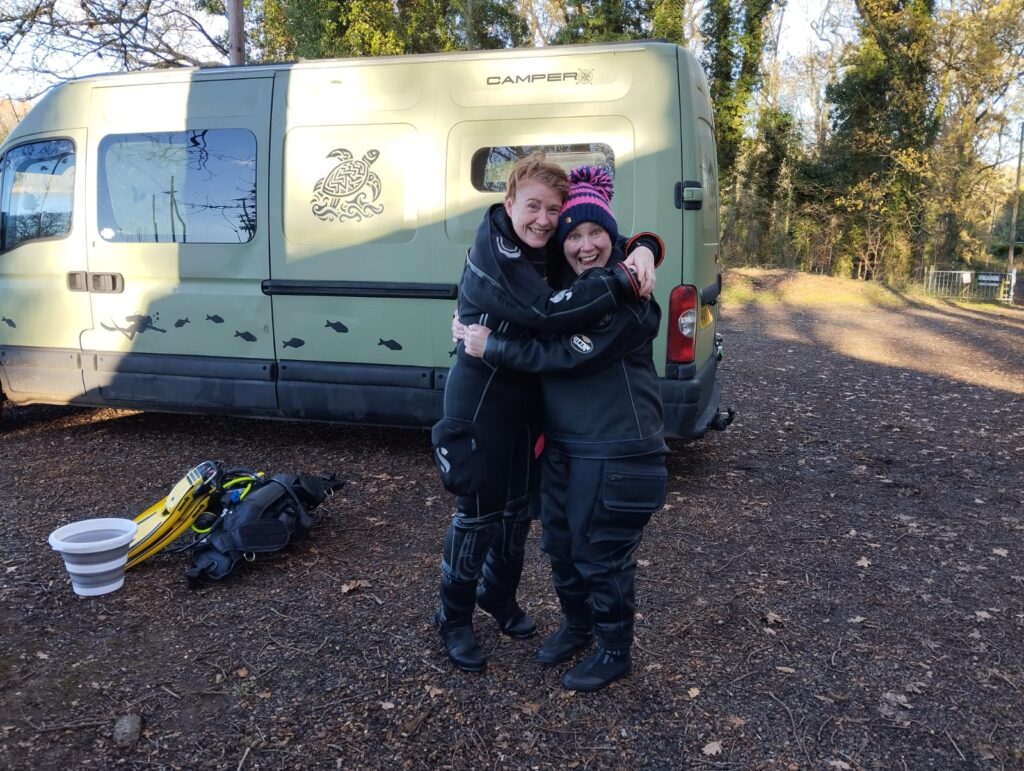
We wrapped up the morning with a well-earned carvery lunch at the pub, warming up over roast potatoes and stories from the water.
Our enormous thanks go to:
- Keith Patrick – for thoughtful, expert training
- Mick Coggins – for guidance and patient assistance
- Victoria Scrannage – for shore cover and photography
- Clare – for dedication, teamwork, and her unforgettable otter impression
- Adam – for kit-running and making sure we always had what we needed
Today felt like the real beginning of our conservation-focused diving journey. Not just theory, not just intention, but practical skills, teamwork, and shared purpose in action.
And if this is what day one looks like, the future of CADSAC’s clean-up diving looks incredibly bright.